Will TikTok Be Banned? Marketers Can’t Afford to Wait and See
The clock is ticking on TikTok. If the platform isn’t sold to an approved U.S. buyer by April 5, 2025, federal legislation will trigger a nationwide ban. Yet, even that deadline is hazy. President Trump delayed enforcement once before, and who can say he won’t do it again? The only thing marketers can count on right now is uncertainty, and that’s already disrupting the digital ad landscape.
A Warning Sign: What a Brief Outage Tells Us About a Potential Ban
A recent Columbia Business School study shows just how costly this uncertainty can be. During a 14-hour TikTok outage in January 2025, Meta’s ad prices spiked by 10% overnight as advertisers scrambled to reallocate their budgets. That short window previewed what a permanent ban could look like, and the results weren’t pretty for smaller advertisers.
However, for franchise brands that empower their local partners with a strong social advertising program, there’s a proven way to maintain cost stability and campaign effectiveness – no matter what happens next.
What the Columbia TikTok Study Revealed
Professors Dante Donati and Hortense Fong analyzed how advertisers reacted during TikTok’s January outage. The results were striking:
- Meta CPMs increased 10% overnight.
- Large advertisers adjusted quickly, launching 21% more Meta campaigns and increasing spend by 66%.
- Smaller advertisers, unable to keep up, cut spending or exited Meta altogether once TikTok came back online.
The study found that demand for Meta ads rose sharply, but the supply of impressions didn’t grow at the same rate, resulting in more competition and higher costs. This wasn’t a one-day blip. The price spike lasted, while TikTok’s return to app stores was delayed nearly a month.
The Implications for Franchise Brands
Franchisees often operate like small businesses: limited budgets, limited time, and limited experience with complex ad platforms. If TikTok disappears, franchisees are more likely to feel the pain of rising Meta prices, unless they’re already using a more strategic model.
Without the right infrastructure, a TikTok ban won’t just mean one fewer platform. It will mean competing for limited, expensive Meta inventory against brands with bigger budgets and more resources.
Why Local Social Advertising Holds the Line
That’s where platforms like Tiger Pistol come in. Franchise brands using local social advertising have already future-proofed their marketing strategies. Tiger Pistol’s model is built on three performance drivers:
- Quality: Brand-approved media and messaging provide a polished, professional standard.
- Relevance: Targeting is tailored to local demographics, behaviors, and interests.
- Locality: Ads are published from individual franchisees’ Facebook Pages, not the national brand account—boosting relevance, engagement, and auction strength.
This “triple-threat” approach improves outcomes and reduces costs, even during high-demand periods.
The Numbers Tell the Story
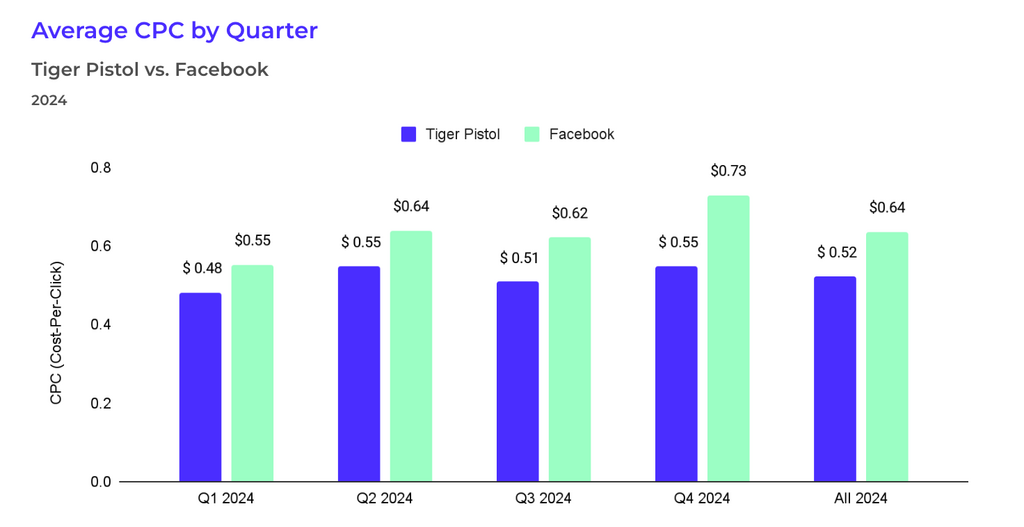
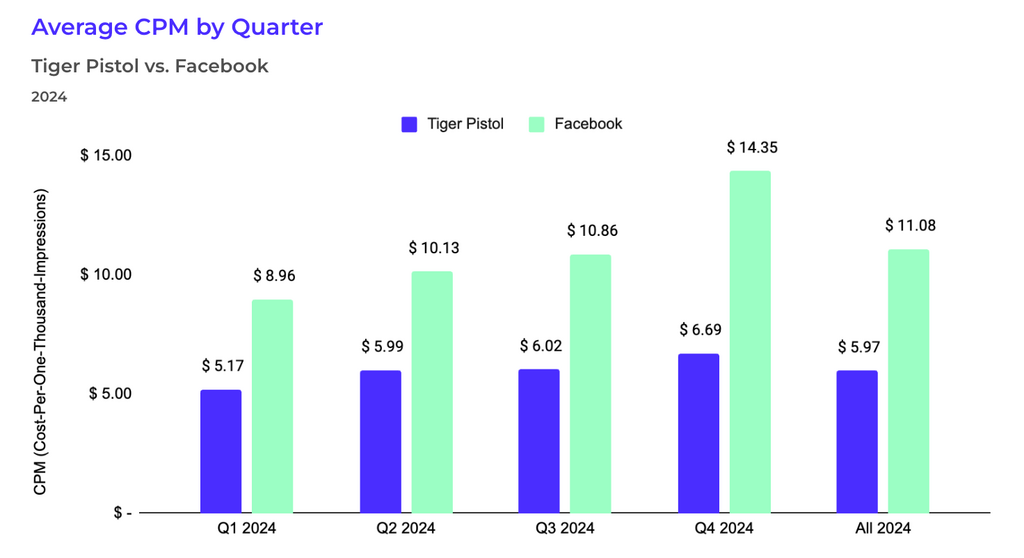
In 2024, Tiger Pistol’s campaigns outperformed Meta benchmarks across the board:
Average CPM: Tiger Pistol = $5.97 | Facebook = $11.08
Average CPC: Tiger Pistol = $0.52 | Facebook = $0.64
And during the peak holiday season in Q4, Tiger Pistol held a steady CPM of $6.69, while Facebook’s benchmark ballooned to $14.35. That kind of consistency is exactly what franchise marketers need in uncertain times.
The Bottom Line
Will TikTok be banned? Will the deadline be extended again? No one knows. But what is clear is that the marketing impact of TikTok’s uncertainty is already being felt, and waiting to react could leave franchisees vulnerable to rising costs and reduced visibility.
Franchise marketers can’t afford to gamble on regulatory timelines. By investing in local social advertising now, they’re gaining better performance today and building resilience for whatever comes next.
Discover how Tiger Pistol can power your local advertising success.
Related Posts
SMBs Shift Budgets to Digital Advertising: Opportunities for Marketing Resellers
Small and medium-sized businesses (SMBs) are reallocating their budgets, showing a clear preference for digital advertising. The recent “Modern Commerce Monitor – Localogy Wave 9” report underlines this trend, offering valuable insights for marketing service resellers. These points reflect the growing importance and strategic shift towards digital and
How Local Ads from Local Pages Increase Relevancy and Decrease Advertising Costs
There is much talk in social media marketing about the importance of “local” social. But what does that really mean in practice? Put simply, localization drives ad relevancy. When we look at the factors that make an ad more relevant, it boils down to two modifiers on your advertiser bid: Estimated Action Rates and Ad […]
Structured Choice: The QSR Franchise Marketing Strategy That Builds Trust and Protects the Brand
QSR franchise marketers walk a fine line: protect the brand, but empower the franchisee. Too much control, and operators disengage. Too little, and the brand loses consistency. The solution isn’t full freedom or rigid governance. It’s structured choice. Why Structured Choice Wins QSR franchisees don’t want to write campaigns from scratch. They want to sel
INFOGRAPHIC: The Power of Vertical Video Advertising
As vertical video posts dominate social feeds, it’s evident that this trend isn’t just growing—it’s flourishing, especially on powerhouse platforms like Facebook, Instagram, and TikTok. With 90% of global advertisers set to increase their investment in this format, the advantages of adopting vertical video advertising are unmistakable. From