Open Instagram or TikTok on a Tuesday night, and the short-form ad that holds the thumb tends to have one quality. It looks like it was made down the street. A real storefront in frame, a staff member talking directly to the camera, an offer that names the town. That is what locally produced creative looks like, and what performs best on the short-form platforms where local ad budgets are increasingly concentrated.
Franchise and multi-location brands are structurally built to produce it. Every location is already a real place with real people. The challenge in 2026 is activating that raw material at the volume a three-platform advertising program demands, with every ad fully on brand.
Local Creative Drives Local Ad Performance
The data on locally-produced creative is consistent. BIA Advisory Services reports that 63% of viewers react more positively to localized ads, with 71% preferring messaging tailored to their community. Local social ad spend is forecast to grow from $36.7B in 2025 to $42.6B in 2026, with more than 70% of that spend running through video formats.
That spend is chasing what locally produced content supplies, by default: proximity, familiarity, and relevance. A national brand campaign built in a studio reads differently than one built from the actual storefront embedded right in the viewer’s neighborhood. Franchise networks already have the storefronts, the staff, the seasonal moments, and the regional context. The advertising question is how to turn that material into vertical video creative across hundreds of locations and three platforms without overwhelming a corporate marketing team.
Brand Compliance and Local Relevance, Resolved in One Template
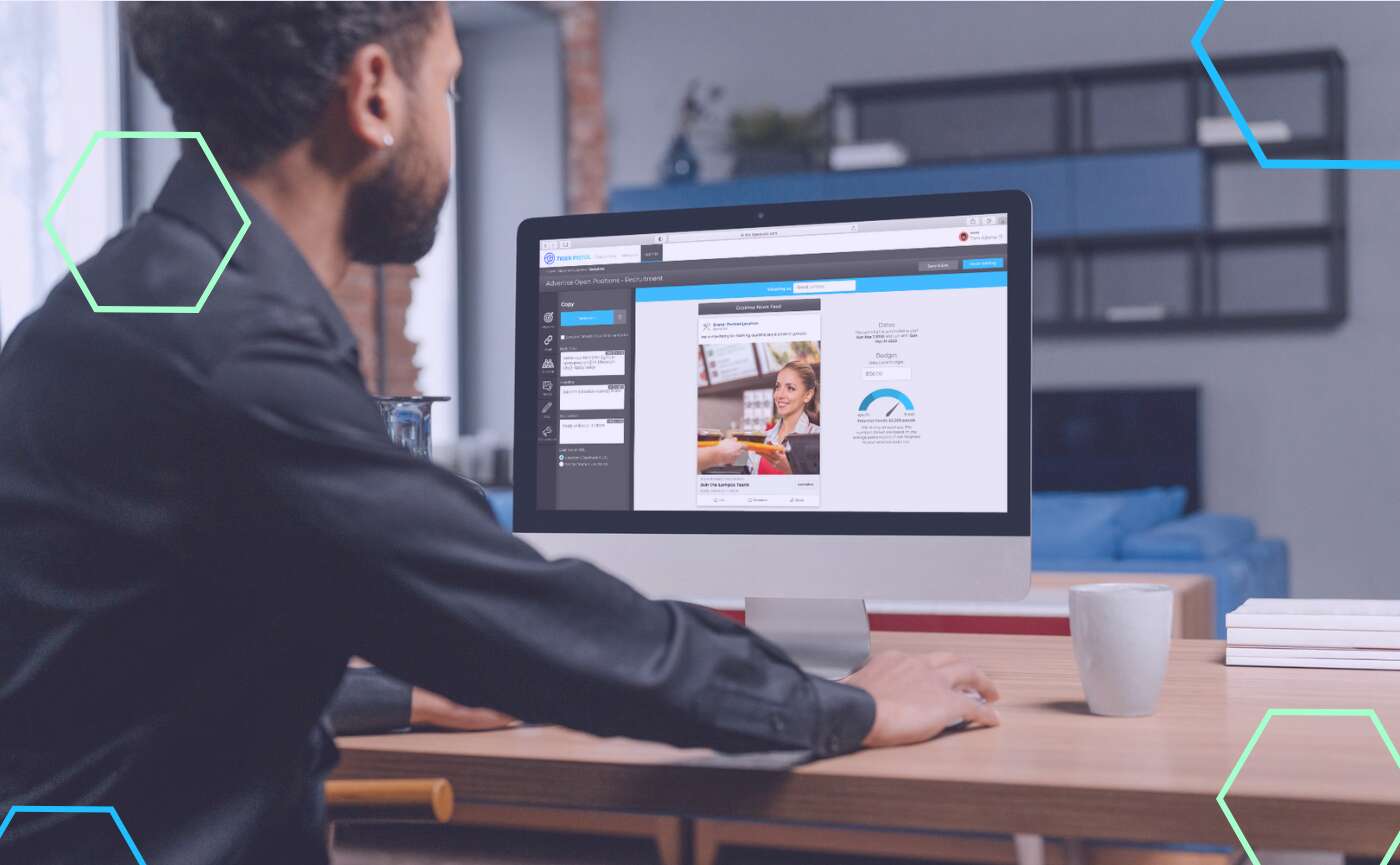
The franchise marketing systems pulling ahead in 2026 have solved the localization problem at the program level. Brand standards live inside an approved master: fonts, colors, logo placement, and message architecture, all locked. What varies by location are the dynamic variables: the offer, the store name, the address, and the regional imagery. From one approved master, every location gets a platform-aware version for Reels, TikTok, and YouTube Shorts, locally relevant, fully on brand, without the corporate team rebuilding creative each time.
The category is already moving this way. The International Franchise Association’s 2026 Franchising Economic Outlook reports that large franchise networks have integrated AI into content strategy, data infrastructure, and organizational design, while mid-sized brands are accessing the same capabilities through third-party platforms whose software is now AI-enabled by default. Tiger Pistol’s Creative Automation Studio is one example of a platform built around this pattern for franchise and multi-location networks.
TikTok’s Local Feed adds a fourth reason the template model matters. Launched in February 2026, Local Feed is a dedicated home screen tab surfacing nearby restaurants, events, and posts from local businesses and creators, the same proximity signal that locally produced creative already delivers. Tiger Pistol is now a badged TikTok Channel Sales Partner, extending that same approved master and dynamic-variable model to TikTok’s local surface alongside Reels and YouTube Shorts.
The practical result is that brand compliance and local relevance no longer compete. Both live inside the same template, and the system produces locally-rooted creative at the scale an advertising program across three vertical platforms actually requires.
Network Adoption Is the Scorecard That Matters
The metric that separates franchise advertising programs that work from ones that stall is participation rate.
Three workflow properties consistently lift adoption. Publishing takes minutes from a phone or laptop, so that a franchisee can run a campaign between morning prep and the lunch rush. Each campaign runs from the location’s own ad account, which carries local credibility into the feed in a way a corporate-owned account cannot replicate. Performance comes back at the store level, so the operator who ran the campaign sees their own impressions, redemptions, and foot traffic.
When those three are in place, adoption compounds. Local creative volume only translates to advertising performance when locations are actually publishing. The franchise brands seeing real lift in 2026 are monitoring participation rate as a KPI alongside the media metrics.
The Network Advantage
The franchise advantage in local advertising has always been the network itself. Authentic, locally-produced creative at scale is a hard problem for national-only advertisers. For a franchise system with the right production infrastructure, it is the default output.
The brands pulling ahead in 2026 are the ones whose next vertical ad will run from a store manager’s phone tonight, already on brand before it ever loads.