
Deploying Micro Campaigns at Scale to Address Different Customer Segments
For brands with multiple customer segments, matching marketing strategy to your market can be complex. It doesn’t have to be. Collaboration is the key to pulling it off right. Take for example our experience with Kichler, the innovative leader in decorative light fixtures, lamps, and home accessories.
Often lighting is a component of a larger room design, and many consumers work with interior designers or other home improvement specialists who often make the decision at the point of purchase to review with their clients. Therefore, brands like Kichler must approach their marketing not only with the end-consumer in mind, but also professionals recommending options and especially the local dealer who guides the decisions in their store.
For Kichler, this multi-pronged sale required two things to be achieved at the same time:
- Any effective strategy needed to speak to the language of the consumer, but in the dialect of the designer or builder.
- Kichler is sold through lighting dealers, which can feature hundreds of products in a showroom, including competitors. They needed to separate themselves in the mind of local dealers who recommended lights to designers, builders, and consumers alike.
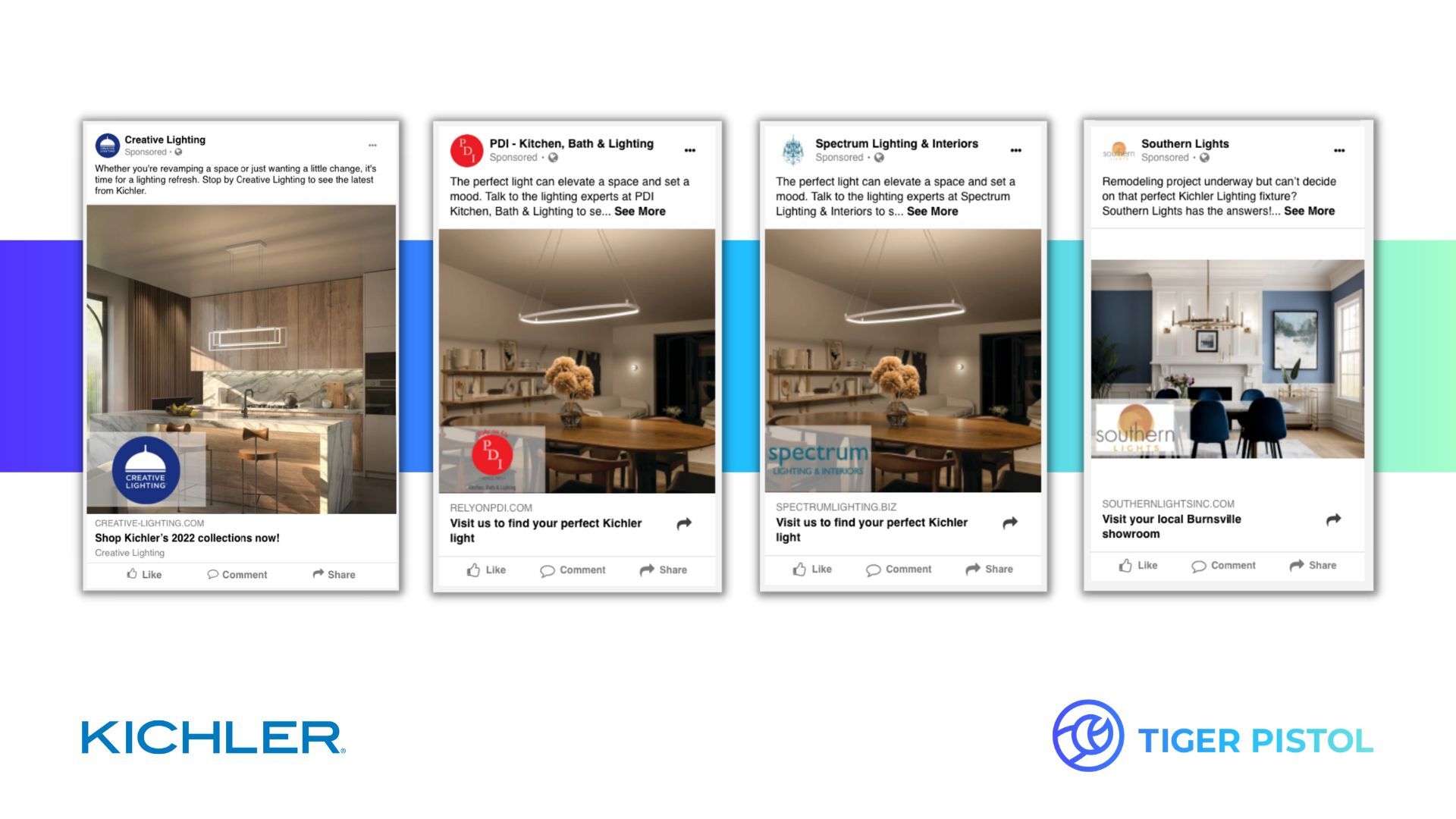
By understanding this nuanced path to purchase, Kichler used Tiger Pistol to complement in-store displays with store-level paid social campaigns. This combined strategy drove sales by connecting a brand’s digital reach to consumers and designers to a specific local independent lighting dealer with increased point of purchase signage. Not only that, but each dealer was able to customize their ad based on choices pre-approved by Kichler.
This potent combination allowed Kichler to drive sales through their independent sales network of dealers, but also built loyalty with the dealers themselves. Through collaborative social advertising, Kichler’s relationship with their dealers transformed beyond just a supplier and into a strategic partnership focused on customer acquisition. Moreover, both enjoyed a 58% decrease in CPM (Cost per 1000 Impressions) creating a broader reach without the expanded budget.
Related Posts

Meta’s Performance 5 Framework: How Tiger Pistol Harnesses Meta’s Recommendations for Unbeatable Ad Results
Wow. It sure feels great to be proven right! We’ve been playing the Meta advertising game for over 12 years now, 10 of those as a Meta Business Partner. Late last year, Meta made an exciting announcement with their Performance 5—five data-driven tactics that guarantee improved ad results. We couldn’t contain our enthusiasm in the office […

Leveraging First Party Data from Customer Loyalty Programs
Since the release of iOS 14 in September 2020, brands and retailers who use their Facebook ads as a way to collect customer data, have had to pivot. Now when a consumer uses any of Facebook’s family of apps on an iPhone, they will be asked to opt in or out of data tracking. Therefore, […]

The Growing Importance of Loyalty Programs in QSRs: Challenges and Opportunities
Loyalty programs have become essential for quick-service restaurants (QSRs) to maintain customer relationships, drive repeat visits, and boost sales. With 81% of Americans holding a QSR loyalty membership and 63% for full-service restaurants, the prevalence of loyalty programs continues to grow. However, while the widespread adoption of these programs demonstra

How Shared Franchise Marketing Analytics Turn Local Performance Into Network Growth
Part 4 of Our Franchisee Marketing Enablement Series Part 1: The Case for Enablement | Part 2: The Local Advertising Operating System | Part 3: Training and Behavioral Enablement | Part 5: The Future of Franchise Marketing Enablement and the Role of Platforms How Franchisee Confidence Becomes Measurable Progress In the previous article, we explored […]