
Why Localized Creative in Social Advertising is Essential to Driving Local Action
You’ve heard the adage about good marketing: It targets the right audience with the right message at the right time.
A lofty goal? Maybe. But doable? Definitely — especially if you use localized creative in your social advertising to hack the game. Localized creative is the perfect tool to drive local action, because it allows you to check all the “good marketing” boxes in a single go.
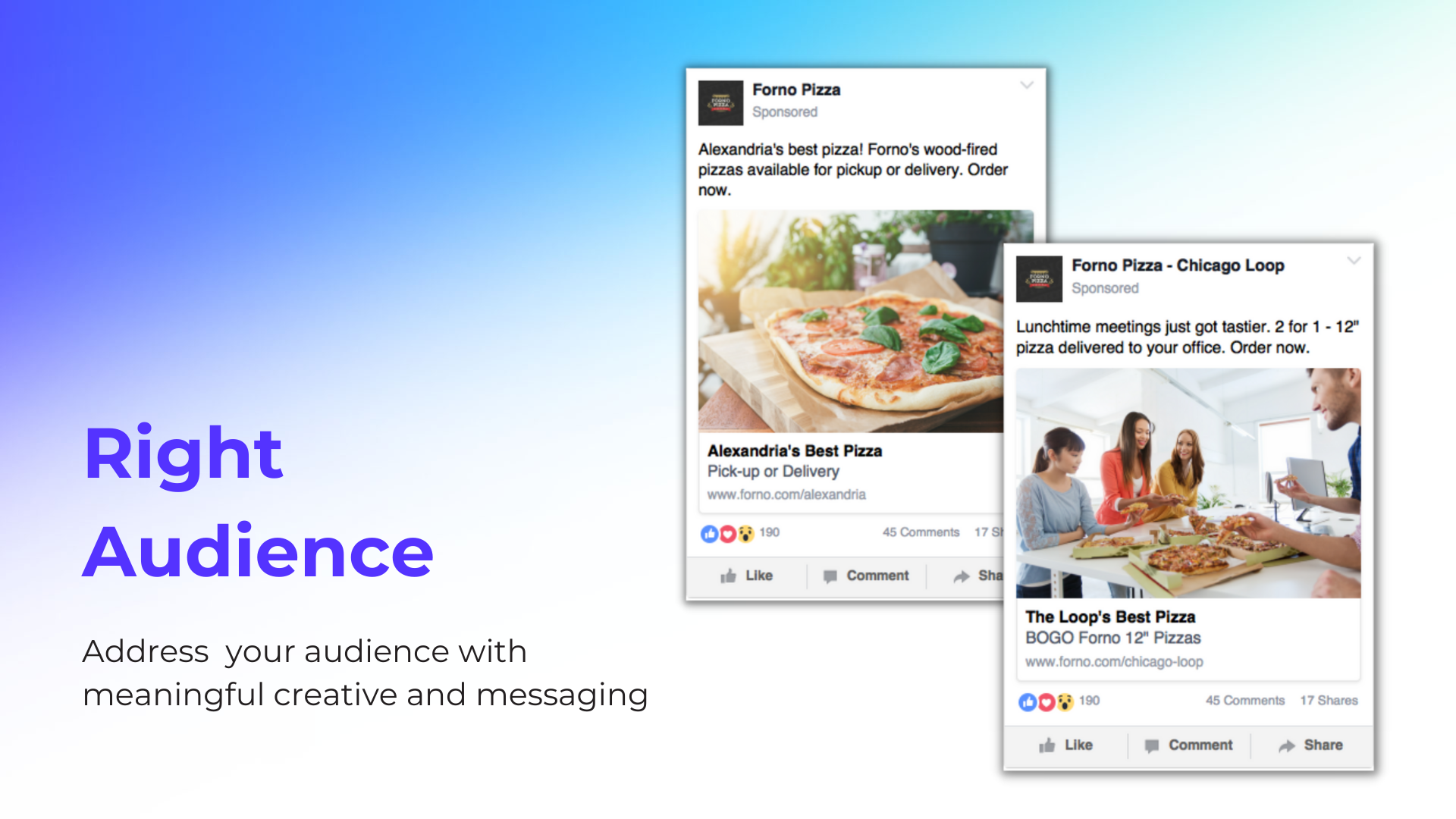
Right Audience
“Shop Local” is more than just a trendy saying of modern consumers — It’s their psychology. Human psychology, really.
We could get real nerdy and talk about the mere exposure effect — the psychological phenomenon that explains why we like things that are in close proximity to us. But in lieu of that, just remember this: Buyers are programmed to prefer local. And that means marketers need to be re-programmed to make that easy. Localized creative allows you to grab the attention of your target audience by speaking to them as directly as possible (considering Facebook prevents the use of names, this is about as direct as you can get).
Right Time
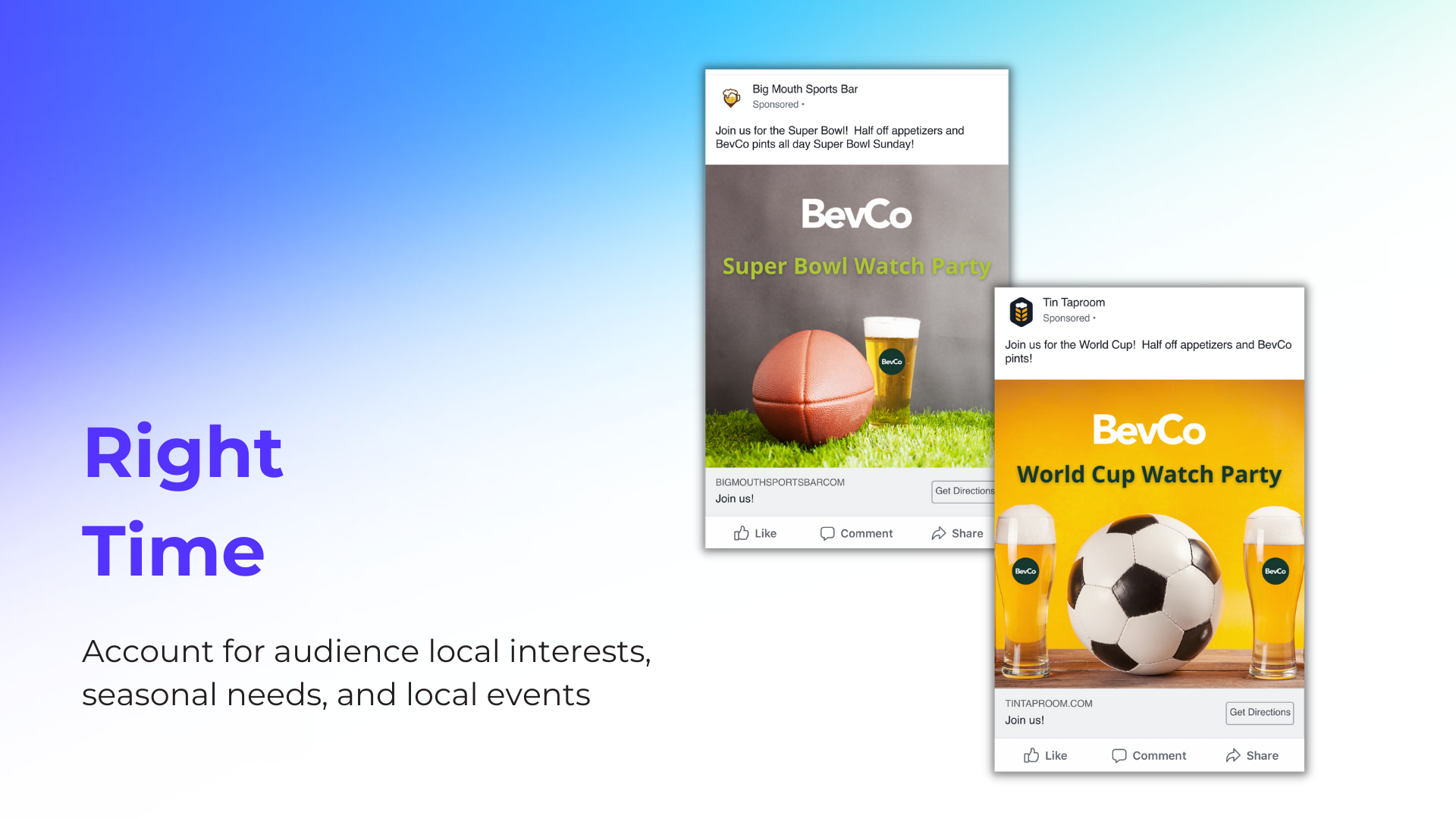
Localized creative is innately granular, permitting a level of specificity that spray-and-pray never could. Consider the difficulty of crafting an ad campaign for an event with a national — or global — audience. Even in the case that locations do run the same event/offer simultaneously, you still have to account for seasonality.
Enter localization.
Catering creative to your end location means you can dynamically adapt content to seasonality or special events.
Right Message
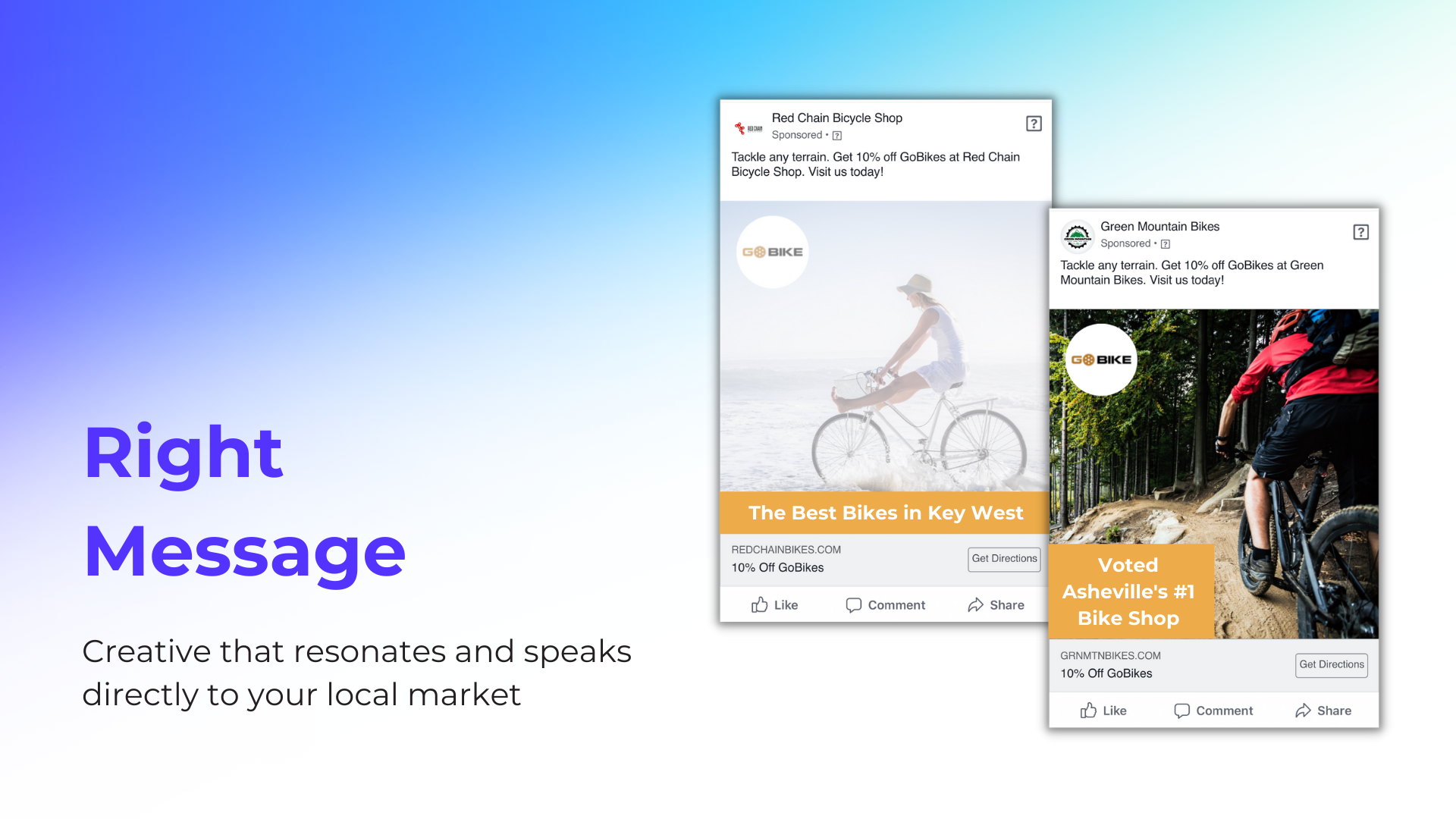
Localizing any of the three aforementioned items does, inevitably, change the message of your ad. But it’s not always enough. Some situations require extra “oomph,” i.e. an even more potent dose of personalization. When your ad message is entirely dependent on the location to which you’re advertising, localizing the message itself is a must-do.
And what’s a more powerful way to change a message than to change your media? Localized media packs a punch by allowing you to adapt your ad’s visuals to a specific locale.
Tiger Pistol’s Collaborative Advertising Platform allows you to localize and personalize all parts of your social ads, from copy to media to call to action. Collaborative creative templates give brands the power to distribute personalized, relevant content based on their points of sale to effectively drive business.
Related Posts

TikTok Advertising Excellence: 12 Field-Tested Strategies for Superior Results
TikTok has emerged as a powerhouse platform for advertisers looking to reach a youthful and engaged audience. To excel at TikTok advertising, follow these 12 expert best practices: Clear Objectives for TikTok Ads: Establishing Measurable Goals Kickstart your TikTok journey by establishing crystal-clear performance objectives. Whether it’s boosting brand a
Where QSR Decisions Happen Now: Facebook, Instagram, TikTok
Diners no longer wait for ads to find them—they seek out what they want in the moment. That moment happens on Facebook, Instagram, and TikTok. It’s visual, mobile, and driven by algorithms that prioritize relevance over reach. For QSR marketers, the question isn’t whether to advertise on these platforms. The question is how to do […]

Empowering Education Franchises: Leveraging Social Media and Amazon Ads to Drive Growth
As public education continues to grapple with pandemic setbacks, the 2024 Education Recovery Scorecard, a joint effort by Harvard and Stanford, reveals mixed progress. Students in 30 states have clawed back about a third of their lost math skills and a quarter of their reading abilities. Yet, the National Assessment of Educational Progress (NAEP), colloquially

Maximizing ROI: Increase Performance and Reduce Marketing Costs with Local Advertising
In today’s challenging economic environment, franchises are feeling the pressure from all sides. Rising operational costs are driving down profitability, and marketing expenses are no exception. According to the IFA, 80% of franchisees experienced lower business earnings last year due to these increased costs, and one in four franchisees reported a significan