How Beauty and Wellness Brands Outperform Facebook Benchmarks with Local Advertising
Beauty and wellness thrive on personal connections and visual storytelling. However, many national campaigns fail to capture the localized nuances that drive engagement and sales. For franchises and multi-location Beauty and wellness businesses, this gap can mean missed opportunities for deeper customer connections and higher conversion rates.
Tiger Pistol’s local social advertising approach enables beauty and wellness businesses to launch hyper-targeted campaigns at scale, ensuring salons, spas, and other personal care services connect with consumers in a more meaningful way while also achieving cost efficiencies.
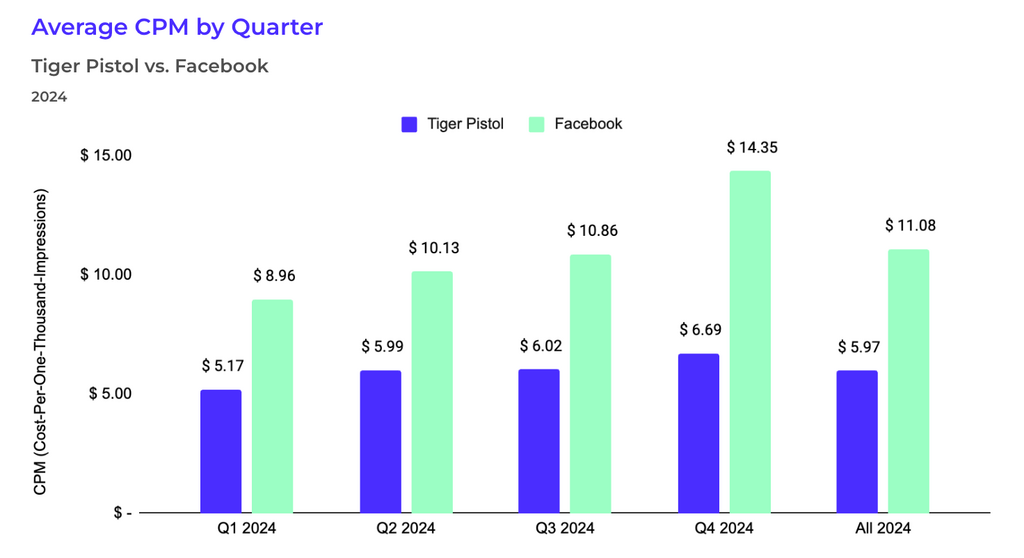
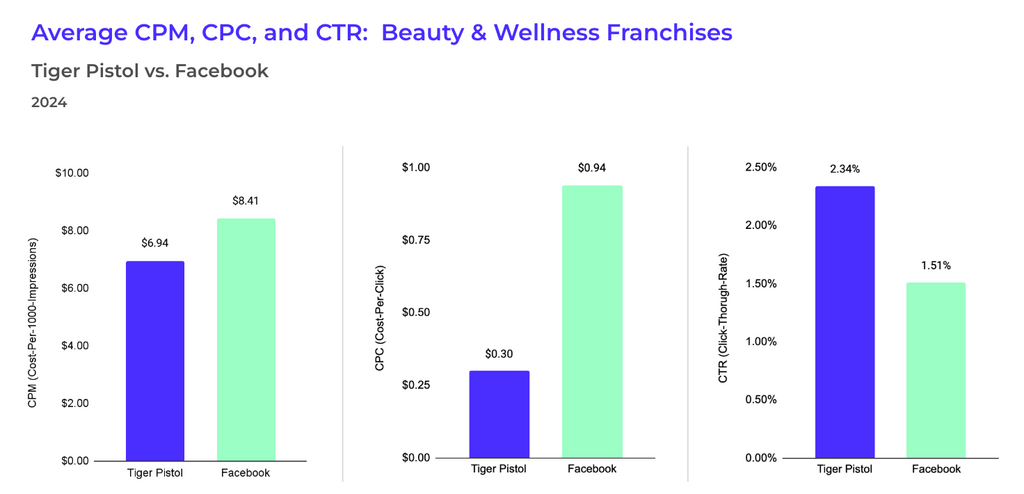
- CPM: 43% lower than Facebook, reducing the cost of reaching potential customers.
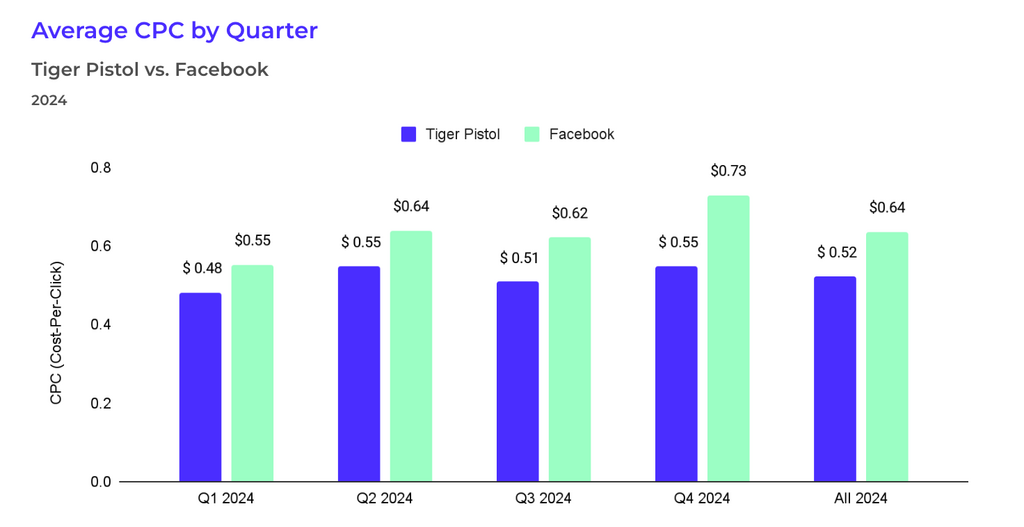
- CPC: 103% lower, making traffic campaigns far more cost-effective.
- CTR: 19% higher, indicating more engagement and stronger ad performance.
By deploying brand-approved ads through local business pages rather than a national brand page, franchises and multi-location brands empower their individual locations to engage customers with content that reflects local trends, seasonal promotions, and regional preferences – driving more in-store traffic and appointment bookings.
Across all industries, Tiger Pistol’s local advertising platform consistently delivers more cost-effective results compared to Facebook benchmarks. On average, brands using Tiger Pistol’s scalable local campaign model see a 60% lower CPM and a 21% lower CPC than Facebook’s national campaigns. Even during peak advertising seasons like Q4, Tiger Pistol’s technology ensures campaign stability, with only a 10.5% increase in CPM compared to Facebook’s 28% surge.
For salons, spas, and other personal care services, executing localized campaigns at scale serves as a powerful competitive advantage – unlocking stronger customer relationships, increased foot traffic, and higher sales.
Learn how Great Clips simplified campaign funding and management – making it effortless for franchisees to launch and pay for local social ads.
Learn how L’Oréal Professionnel empowered independent salons to attract new clients with supplier-funded campaigns, creating stronger partnerships and increasing bookings.
Discover how Tiger Pistol can power your local advertising success.
Related Posts
Tiger Pistol’s New Playbook Reveals How Local AdTech Supercharges Field Support & Franchise Growth
The Ultimate Guide for Field Teams to Strengthen Franchisee Success, Maximize Local Advertising Impact, and Scale with Confidence Tiger Pistol, the most advanced local advertising platform, today announced the release of its latest playbook, Empowering Franchise Success: How Local AdTech Transforms Field Support and Marketing. This essential resource provides f
Maximizing Pizza Franchise Growth with Facebook, Instagram, TikTok, and Amazon Ads
While the pizza industry typically adopts a consistent marketing strategy year-over-year, recent indicators suggest notable shifts compared to the previous year. In 2024, Pizza Today key insights show social media is an important channel, with 78% of pizza operators using social media as part of their local marketing efforts, and Facebook continues to dominate
Tiger Pistol Expands Advertiser Ecosystem to Include TikTok, Paving the Way for Vertical Video Social Media Advertising at Scale
Surveys among marketers planning their 2024 budgets underscore the significance of short-form video. A recent Kantar study reveals that three out of every four marketers intend to boost their online video budget. Furthermore, MarketSplash found that a significant majority of marketers (85 percent) firmly support short-form, vertical videos as the preferred cont
Empowering Education Franchises: Leveraging Social Media and Amazon Ads to Drive Growth
As public education continues to grapple with pandemic setbacks, the 2024 Education Recovery Scorecard, a joint effort by Harvard and Stanford, reveals mixed progress. Students in 30 states have clawed back about a third of their lost math skills and a quarter of their reading abilities. Yet, the National Assessment of Educational Progress (NAEP), colloquially