How Restaurant Franchise Brands Outperform Facebook Benchmarks with Local Advertising
Restaurants rely on consistent foot traffic and repeat customers to thrive, but national campaigns often fail to capture local dining trends, special events, or seasonal promotions. For franchises and multi-location restaurant brands, reaching the right audience at the right time is critical to driving reservations, takeout orders, and in-store visits.
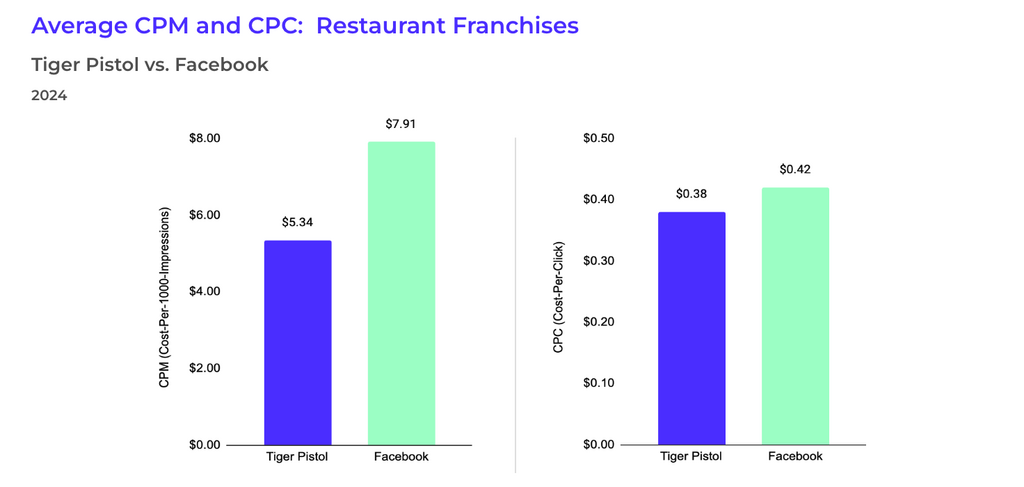
With Tiger Pistol’s localized advertising approach, restaurant brands can deploy hyper-targeted campaigns that deliver stronger engagement and cost efficiencies. Restaurants using Tiger Pistol’s platform achieve:
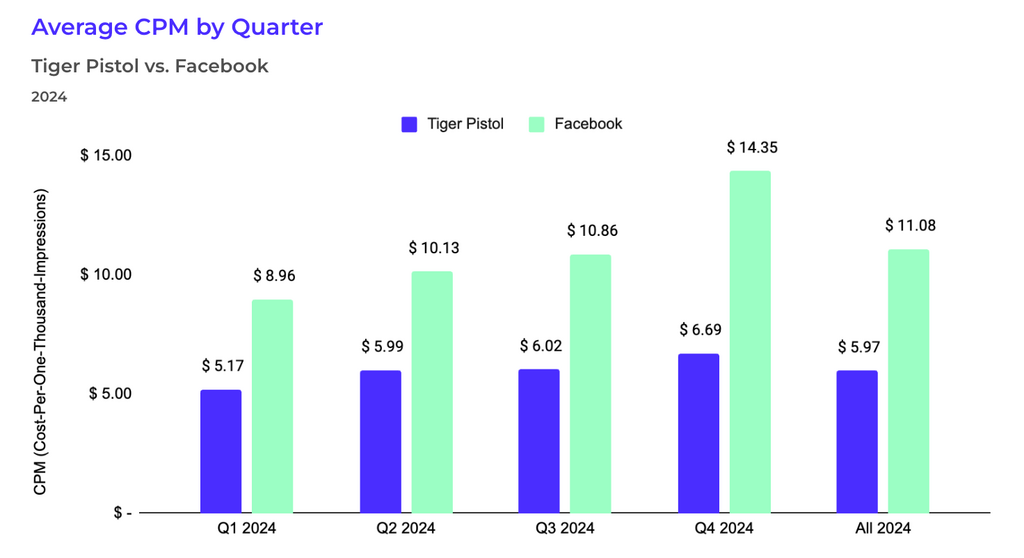
- 39% lower CPM than Facebook, making brand awareness campaigns more affordable.
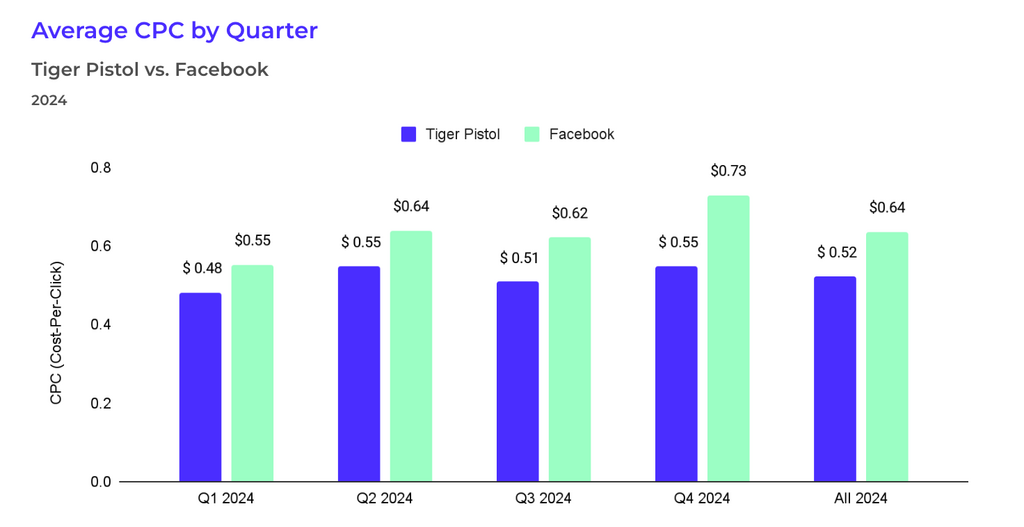
- 10% lower CPC, helping restaurants drive more website visits, reservations, and orders.
By focusing on locality, restaurants can engage diners with relevant messaging, special offers, and promotions tailored to their specific markets. Whether promoting a lunch special, a new seasonal menu, or a loyalty program, localized advertising ensures restaurant brands stand out in a crowded digital space and remain top-of-mind for local diners.
Across all industries, Tiger Pistol’s local advertising platform consistently delivers more cost-effective results than Facebook’s benchmarks. Even during peak advertising seasons like Q4, Tiger Pistol ensures cost stability, with only a 10.5% increase in CPM compared to Facebook’s 28% surge.
Tiger Pistol’s localized approach to social advertising consistently outperforms Facebook’s Business Manager by improving efficiency and engagement while lowering costs.
For franchise and multi-location restaurants, scalable local advertising is the key to sustainable growth. By running ads from local business pages rather than a national brand account, restaurants build credibility, drive more direct engagement, and ensure promotions are relevant to each market. Tiger Pistol’s platform empowers brands to maintain centralized control while giving individual locations the flexibility to promote menu items, events, and offers that resonate with their local customer base. With a localized strategy, restaurant brands can fuel consistent foot traffic, increase orders, and strengthen long-term customer loyalty.
Learn how Wendy’s streamlined franchisee social campaign management – centralizing control while unifying data across regions
Learn how Ben & Jerry’s boosted delivery orders with location-targeted, Uber-Eats coupon campaigns – turning local ads into real sales.
Discover how Tiger Pistol can power your local advertising success.
Related Posts
TikTok vs. Instagram Reels: A Winning Strategy for the Greater Cleveland Food Bank
In the bustling heart of Cleveland, the Greater Cleveland Food Bank (GCFB) provides meals to families and individuals in need. One in seven of the area’s residents struggles with food insecurity. GCFB’s mission was clear: encourage monetary donations during checkout at participating local grocery stores. To tackle this, they decided to tap into the power [&
Personalization & Localization: QSR Advertising That Drives Engagement & Loyalty
Personalized advertising is a game-changer when it comes to customer engagement. According to recent studies, 91% of consumers are more likely to shop with brands that provide personalized offers based on their preferences and behaviors. By leveraging shared loyalty data, franchisees can create hyper-targeted ads that reflect their customers’ unique prefe
Reels vs TikTok vs YouTube Shorts: A 2026 Platform Comparison
Open any content calendar and the pattern repeats itself: one vertical video, exported three times, uploaded everywhere. Efficient? Yes. Effective? Increasingly less so. By 2026, Reels, TikTok, and YouTube Shorts have grown into distinct worlds, each with its own creative style, audience habits, and ways of measuring success. Brands getting the most out of ve
Why Pizza Still Matters (And How Smart Franchises Can Reignite Local Love!)
Recent industry coverage highlights what many in the hospitality industry are calling a “plateau” in pizza sales and popularity, with pizza chains experiencing slower growth compared to past decades and even losing ground to other fast-casual cuisines. But let’s be clear. Pizza isn’t going away. While pizza’s rank among U.S. restaurant sales has shi