The Ground Game: Why Local Matters in a Shifting Home Services Market
The home services category is shifting. Consumer demand remains strong, but behaviors, budgets, and buying decisions are evolving quickly.
More than 70 percent of professionals in the industry expect their business to grow this year, even in the face of inflation, labor shortages, and rising material costs. That optimism reflects something fundamental: homeowners still need help. They are repairing, maintaining, and improving their properties even when other spending slows.
But the way homeowners choose providers has changed.
Generational shifts drive new expectations
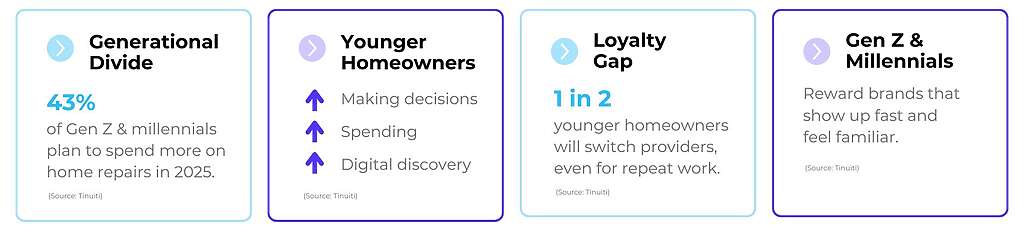
Younger homeowners are spending more and need more. Forty-three percent of Gen Z and millennials plan to increase their home repair spending this year, compared to just 32 percent of older generations. These homeowners are also more likely to make hiring decisions on their own and rely on digital platforms to find service providers.
Confidence in DIY is dropping. Only 20 percent of millennials feel comfortable repairing drywall or installing a ceiling fan. One in three lacks the confidence to change a lightbulb. These gaps translate into a steady demand for trusted professionals, especially those who show up well online.
These same homeowners also have different hiring priorities. For Gen Z and millennials, local reviews rank above national brand recognition. Online visibility, reputation, and convenience carry more weight than legacy branding.
Economic Pressure Reshapes Priorities
High mortgage rates and inflation have slowed large-scale home improvements but fueled an increase in repair and maintenance spending. More than 60 percent of homeowners say they are delaying major upgrades or staying longer in their current homes than planned. As a result, they are investing in services that preserve value and improve livability.
This shift puts essential services, like plumbing and HVAC, at the forefront. These are high-intent, lower-cost projects where speed, proximity, and trust drive selection. Homeowners don’t wait. They search, compare, and book quickly.
Consolidation Raises the Bar
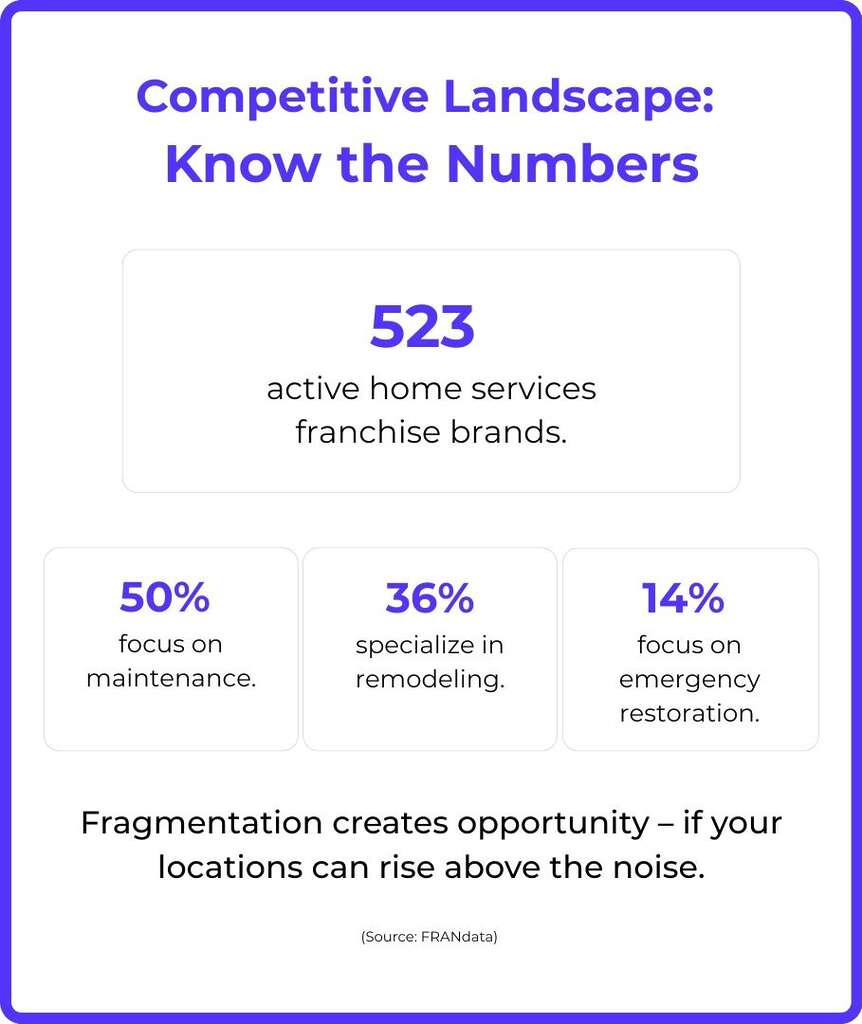
The home services franchise space includes more than 500 active brands, most focused on just one or two categories. But the landscape is evolving rapidly. Private equity firms are acquiring complementary brands, bringing services like plumbing, HVAC, cleaning, and restoration under one roof. They move quickly and bring serious marketing muscle into local markets by bundling services and scaling visibility.
As consolidation accelerates, franchisees face growing competition not just from outside brands but also from sister brands within their own networks. The only way to stay visible is to stand out. Franchise systems that equip locations with local advertising will win – on the map and in the mind of the customer.
This consolidation raises the stakes. Investors expect performance. Franchisees expect support. A national strategy without local execution satisfies neither.
Demand remains strong, but loyalty is thin. Brands that empower their franchisees to act fast, stay visible, and earn trust at the local level will capture the next wave of growth.
Discover how Tiger Pistol can power your local advertising success.
Related Posts
Structured Choice: The QSR Franchise Marketing Strategy That Builds Trust and Protects the Brand
QSR franchise marketers walk a fine line: protect the brand, but empower the franchisee. Too much control, and operators disengage. Too little, and the brand loses consistency. The solution isn’t full freedom or rigid governance. It’s structured choice. Why Structured Choice Wins QSR franchisees don’t want to write campaigns from scratch. They want to sel

Tiger Pistol’s New Playbook Elevates QSR Loyalty Programs with Local Digital Advertising Strategies
Empowering QSR Brands with Data-Driven Solutions, “The Next Step in QSR Loyalty Programs” Explores How Sharing Loyalty Data and Local Advertising Can Boost Engagement, Sales, and Retention Tiger Pistol, the most advanced local advertising platform, today announced the release of its latest resource for QSR marketers: “The Next Step in QSR Loyalty Programs
The Hidden Riches of Loyalty Programs for QSR & Restaurant Marketers
Customer loyalty programs offer quick service restaurant (QSR) and multi-location restaurant marketers a treasure trove of valuable data. Through these programs, brands and marketers can harness first-party data to unearth consumer insights that shape ongoing marketing strategies. This data, willingly provided by customers, unlocks a world of possibilities. The
Revolutionize Marketing Accountability with Local Advertising
Marketing accountability has transformed thanks to tech advancements, shifting business priorities, and the demand for improved ROI tracking. In earlier times, marketers honed in on surface-level metrics like impressions and reach, which failed to truly show a campaign’s effect on profits. But times have changed. A Capgemini study discovered that over 75%